


SEB: Achieving WCAG 2.1 AA Through User Research
SEB is Estonia's second largest bank, providing a wide range of private and corporate services. It has a strong position in asset management and life insurance and is one of the leaders in the development of mobile banking in the Baltic countries.
Problem: with the reduction in the number of physical branches, SEB is focusing on improving the digital experience for customers. The study was conducted on the eve of the entry into force of the European Accessibility Act, which sets new legal requirements for banks regarding accessibility.
European Accessibility Act: The European Accessibility Act covers products and services that are identified as most important for persons with disabilities, but at the same time have a wide variety of accessibility requirements in different EU countries.
Research
Preparation
We analysed regulations, professional literature and international research, including the WCAG standard, and conducted an accessibility audit among competitors.
At this stage, we decided to focus on older SEB customers. Based on the book ‘Web for everyone’, we created a framework for a future user persona to better understand the older customer segment.
Focus group with advisors
We spoke with five SEB advisors. They are the first point of contact for customers when they encounter problems. We asked the advisors about the issues that users bring to their attention. We devoted the first focus group to general questions and identified the most important topics, and during the second session we delved deeper into them. The results were analysed using Codens.
Interviews with customers
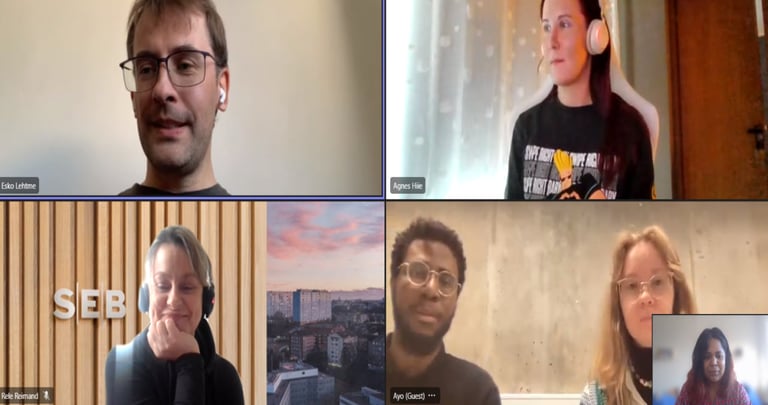
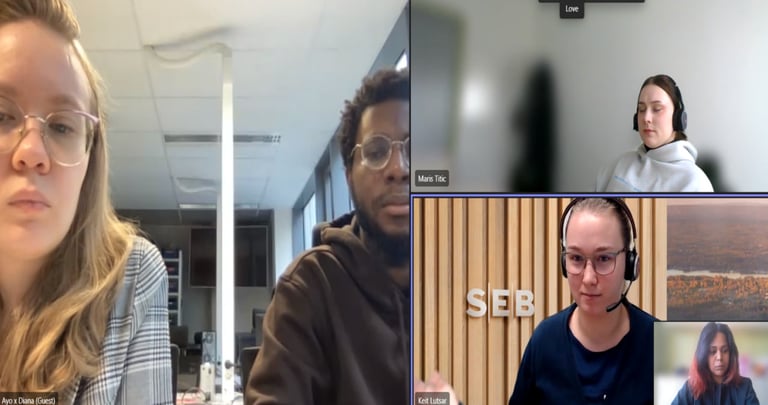
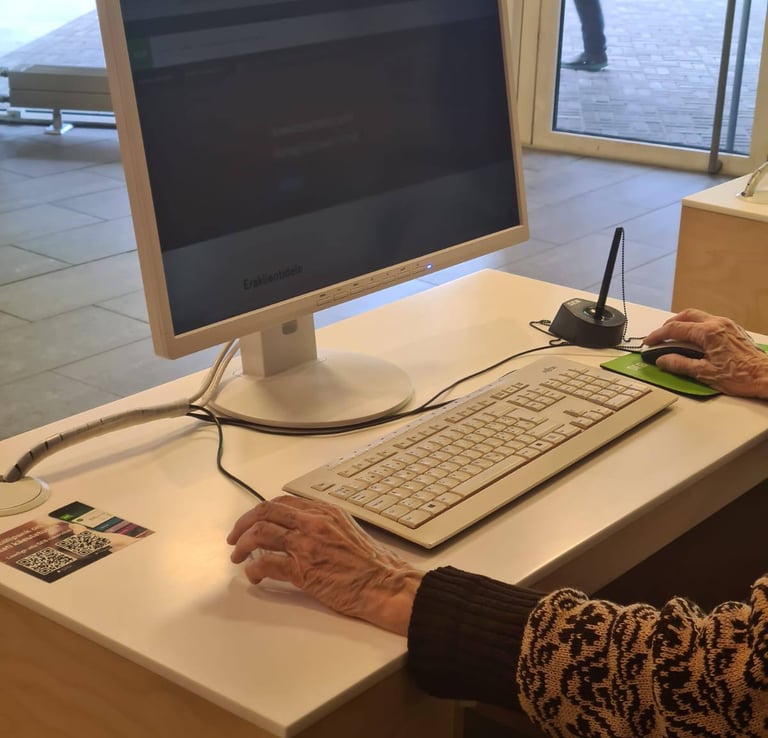
Despite the language barrier, we managed to conduct a series of our own interviews with SEB customers. We planned several in-depth interviews and also conducted field research directly at the bank branch.
An unexpected insight: the people in the branch are precisely those who do NOT use online services. But this also provided valuable information — we learned why they refuse to use digital channels (low digital literacy, lack of motivation, fear).
Accessibility audit
We conducted an audit of SEB's marketing website according to WCAG 2.1. The audit covers technical specifications, but we sought to ensure a high level of overall user experience — where accessibility intersects with CX. As a result of the audit, we made the following recommendations:
Rethink how <label> fields are used to improve accessibility.
Improve colour contrast on the website for links, buttons, and other important elements.
Add alternative text (alt text) to images so that screen readers can provide complete information to users.
Follow the heading hierarchy to help screen readers interpret the content of the web page correctly.
Ideation
Customer journey mapping (CJM)
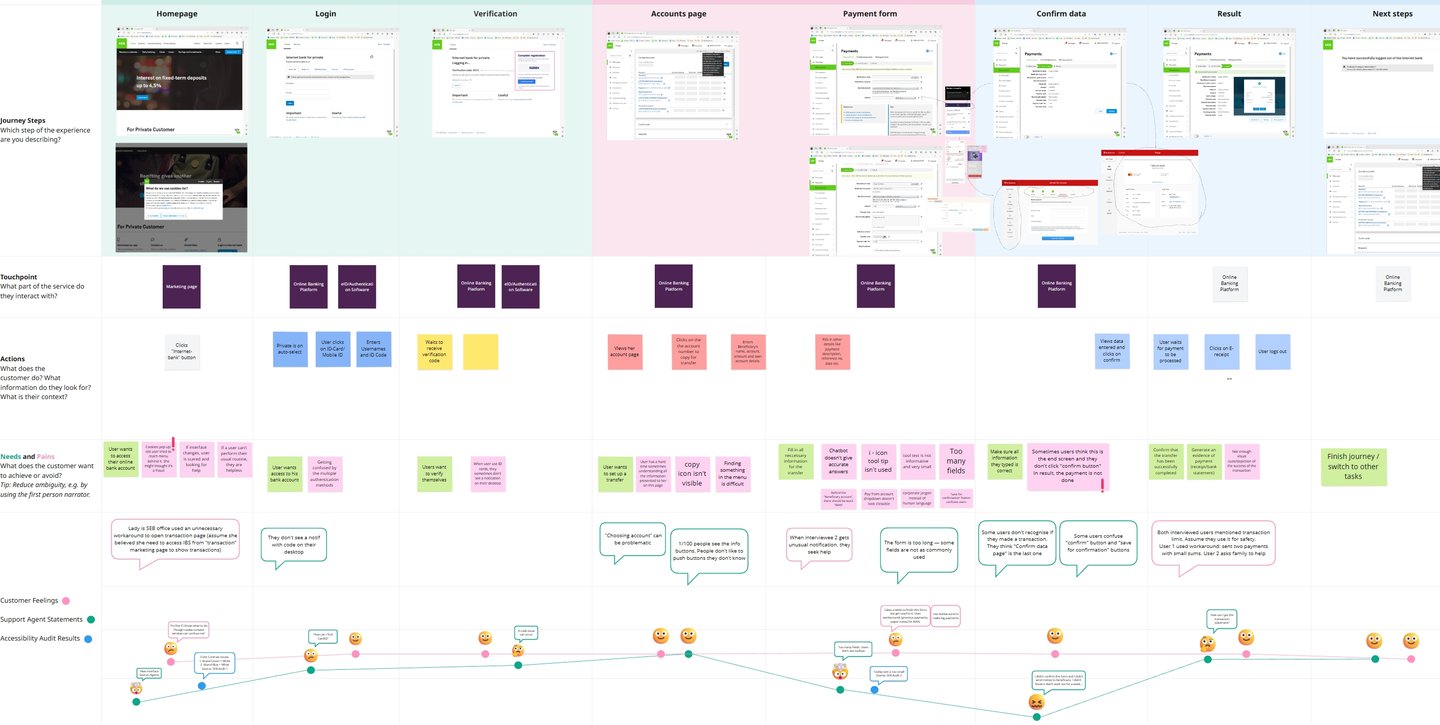
Working on the CJM enabled us to identify key problem areas, link them to focus group data, and formulate solutions on which we will focus our future work.
Creating a user persona
Based on all the data collected, we created a persona for Karolina — not an abstract image, but a collection of real characteristics of SEB customers.
Karolina:
74 years old, retired accountant
Early macular degeneration, arthritis
Has been using online banking for over 10 years, but encounters difficulties
Level of comfort with technology: 5/10
Core values: security, simplicity, predictability


This persona helped give SEB a clear and humanised picture of a typical user with accessibility needs.
Design
This stage of the project included low-fidelity and high-fidelity wireframing and prototyping.
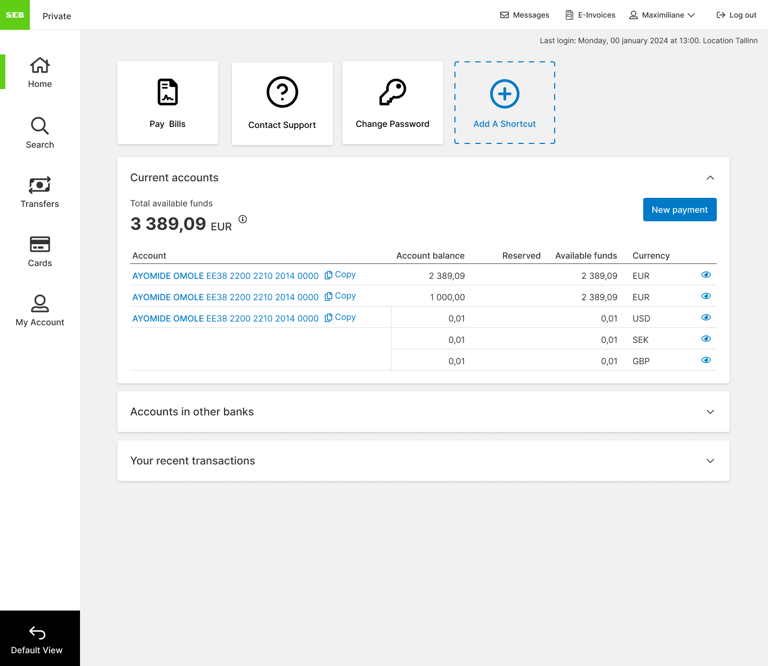
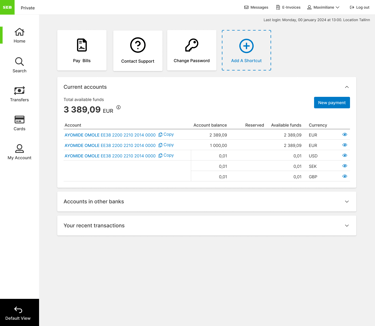
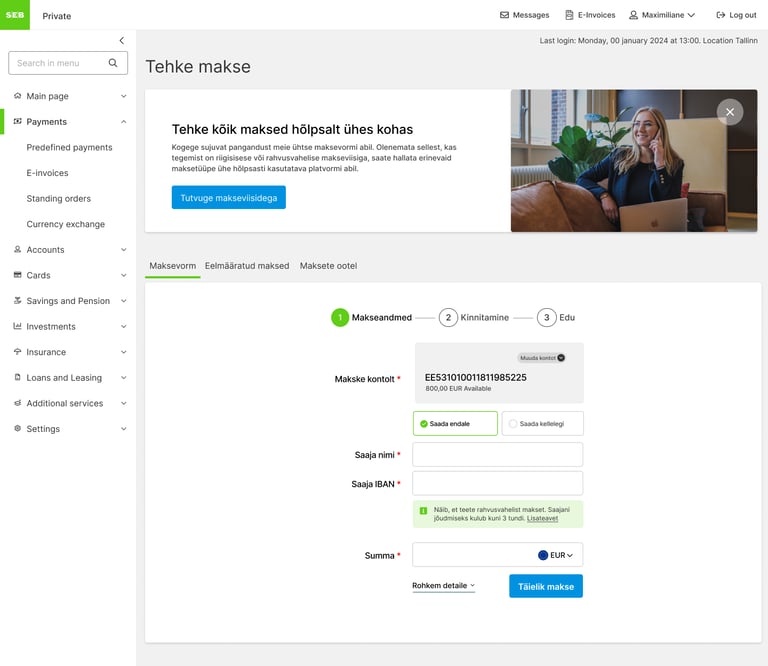
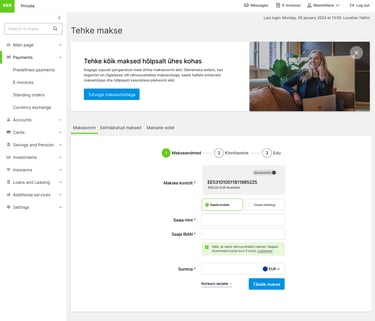
We created a prototype of the updated online banking interface for older SEB users in Figma. It included simplified forms and login, auto-fill, quick functions on the main dashboard, and progress markers in the form of money transfers.
Unlike Ukrainians, Estonians perceive long forms as a sign of reliability. So we sought to find a balance between simplicity and trust.
Testing
We tested the finished prototype with two users. Both of them were part of the group we were researching and had experience using SEB online banking. Each of them was given the task of performing basic tasks in a copy of the existing interface and in a simplified version that we developed based on our research.
We saw that users preferred the simplified version of the interface and were able to complete the tasks faster with it. We also received information on where the interface needed to be refined.
Implementation and feedback
At the end of the project, we gave a presentation to the SEB team and answered their questions. Importantly, the results of our work are still being used by the bank. In particular, Karolina's persona has become a key reference point for understanding the needs of older users.
‘With the help of students, we gained a better understanding of the ever-growing age group of elderly people. It is very important for the bank to serve all customers and help them achieve their goals. No one should feel techno-stress over something as simple as making a bank transfer.’
- Kristina Lillo, Head of Innovation at SEB




‘This collaboration provided us with new tools and approaches. Methodical work on testing WCAG 3.0 recommendations helped us learn how to apply inclusive design to the entire user journey. The broad perspective proved particularly valuable. This academic collaboration has led to concrete changes; we have integrated new accessibility assessment methods into the daily workflows of the UX team, enabling us to create more inclusive digital solutions.’
- Esko Lehtme, Head of Design at SEB

‘Several suggestions gathered from user feedback have already been implemented and published in SEB's online bank. The contrast of components on the online bank's desktop has been changed, and thanks to the students' work, we have highlighted the entire customer journey, not just a few individual pages. Work is also continuing on improving the texts.’
- Kristina Lillo, Head of Innovation at SEB
Working on accessibility not only helps improve the customer experience, but also expands the pool of potential users. This opens up new opportunities for your business to grow and increases its competitiveness.
By caring about accessibility, you demonstrate your concern for each customer and strengthen your brand's reputation as responsible and modern. In addition, such solutions help increase loyalty, improve interaction with the product, and can become a key advantage in the market.




Diana Miftakhova
WCAGENTS Expert
+380 73 377 9824
info@wcagents.com.ua
Vulytsya Yevhena Sverstyuka, 2А, 608
BC Livoberezhniy, Kyiv
